Am I a Psychopath — Key Traits, Common Myths, and What to Do Next
You typed "am i a psychopath" into a search bar, and now you're here. Maybe a comment from a friend stung. Maybe you noticed something about yourself — a coolness in moments where others seem upset, or a pattern of saying the right thing without truly feeling it. Whatever brought you here, the question itself shows something important: you want to understand yourself better.
This guide walks you through what psychopathy actually means, the traits researchers associate with it, how it differs from sociopathy, and what steps you can take if these patterns feel familiar. You'll also find a self-reflection checklist and clear guidance on when professional support makes sense. None of this replaces a clinical evaluation — but it can help you organize your thoughts and figure out what comes next. If you'd like a structured starting point, you can explore the Dark Triad personality test to learn more about related traits.
What Does Psychopath Actually Mean in Psychology?
The word "psychopath" carries a lot of cultural baggage — horror movies, true crime podcasts, and dramatic headlines have shaped a very specific image. However, the clinical reality is far more nuanced.
Psychopathy is not an official diagnosis in the DSM-5-TR. Instead, it describes a cluster of personality traits studied extensively in forensic and clinical psychology. These traits include reduced empathy, shallow emotional responses, and a tendency toward manipulative behavior. The closest recognized diagnosis is Antisocial Personality Disorder (ASPD), though not everyone with ASPD fits the psychopathy profile.
Researchers like Robert Hare developed the Psychopathy Checklist-Revised (PCL-R) to measure these traits on a spectrum. That word — spectrum — matters. Psychopathic traits are not all-or-nothing. Most people fall somewhere along a range, and having a few of these characteristics does not mean you meet criteria for any disorder.
Why Psychopathy Is Not a Formal Diagnosis
Because psychopathy is a research construct rather than a diagnostic category, no therapist will "diagnose you as a psychopath." Clinical assessments focus on observable behavior patterns, functional impairment, and distress — not a label from pop culture. Understanding this distinction helps reduce unnecessary fear and encourages a more accurate self-assessment.
How Psychopathic Traits Exist on a Spectrum
Think of psychopathic traits like volume dials rather than on-off switches. You might score higher on boldness but low on meanness. Someone else might show high impulsivity yet still experience genuine empathy. Research consistently shows that these traits are dimensional, meaning everyone falls somewhere on the continuum. A single elevated trait does not define your entire personality.
What Are the Key Traits Associated With Psychopathy?
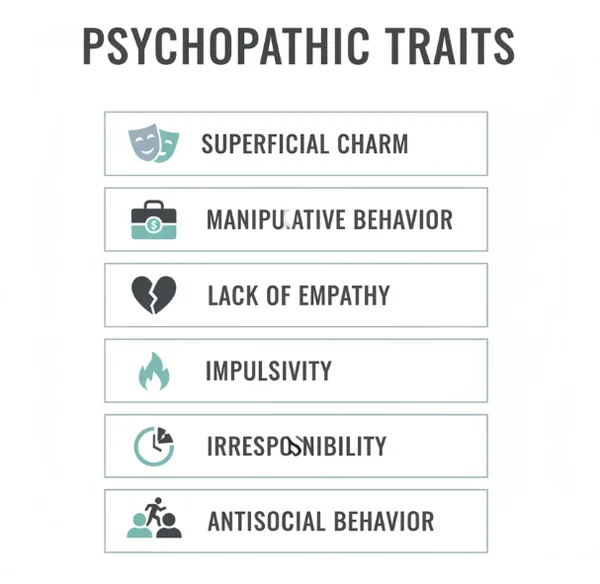
If you're wondering "am i a psychopath," understanding the specific traits researchers study can help you reflect more clearly. Here are the core characteristics most frequently identified in the literature:
- Reduced empathy. Difficulty understanding or sharing in other people's emotional experiences, especially distress.
- Superficial charm. A natural ability to appear engaging, likable, and socially skilled — sometimes used strategically.
- Grandiose sense of self-worth. A persistent belief in being exceptional or more important than others.
- Pathological lying. A recurring pattern of deception that goes beyond occasional white lies.
- Manipulative behavior. Using others for personal gain without regard for their wellbeing.
- Lack of remorse or guilt. Little regret after actions that hurt others.
- Shallow emotional responses. Emotions that seem blunted, brief, or performed rather than genuinely felt.
- Impulsivity and poor behavioral control. Acting on urges without considering consequences.
- Need for stimulation. A low tolerance for boredom and a craving for excitement.
- Failure to accept responsibility. Consistently blaming others or external circumstances for personal failures.
Emotional Patterns vs. Behavioral Patterns
It helps to separate what you feel from what you do. Emotional patterns — such as shallow affect or reduced guilt — reflect internal experiences. Behavioral patterns — like impulsivity or manipulation — reflect outward actions. Both categories are relevant, but they don't always appear together. You can have muted emotional responses without engaging in harmful behavior, and vice versa.
Am I a Psychopath or a Sociopath — What Is the Difference?
This is one of the most common follow-up questions people ask. The terms are often used interchangeably in everyday conversation, but researchers draw meaningful distinctions between them.
| Feature | Psychopathy | Sociopathy |
|---|---|---|
| Origin | Believed to involve stronger genetic and neurological factors | Often linked to environmental influences such as childhood trauma or neglect |
| Emotional range | Shallow, blunted emotions across situations | May experience genuine emotions but struggle to regulate them |
| Behavioral style | Calculated, controlled, often blends in socially | More impulsive, erratic, and likely to display obvious agitation |
| Relationships | Can form strategic attachments but rarely deep bonds | May form attachments to specific individuals or groups |
| Social presentation | Charming, composed, hard to detect | More likely to have visible conflicts and unstable behavior |
Both fall under the broader umbrella of antisocial personality patterns, but the mechanisms differ. If you're asking "am i a sociopath or psychopath," the answer often lies in whether your patterns feel more internal and calculated or more reactive and emotionally volatile.
Can Someone Show Traits of Both?
Yes. These categories are not rigid boxes. Many people exhibit a mix of characteristics from both profiles. In clinical settings, clinicians focus less on the label and more on the specific patterns that cause distress or impairment in daily life. The goal is not to fit neatly into one category but to understand which patterns apply to you and how they affect your relationships and decisions.
Everyday Signs That May Point to Psychopathic Tendencies
Reading a list of clinical traits is one thing. Recognizing those patterns in daily life is another. Here are some real-world scenarios where psychopathic tendencies might show up:
- In relationships. You charm people easily but lose interest quickly once the novelty fades. Partners may describe you as emotionally unavailable or cold during conflicts.
- At work. You strategically manage impressions and advance your goals effectively, but colleagues notice a pattern of taking credit, shifting blame, or being indifferent to how your actions affect the team.
- Under stress. While others around you panic, you remain calm — not because you've worked on emotional regulation, but because the situation genuinely doesn't trigger much feeling for you.
- When confronted. You deflect criticism smoothly, redirect conversations, and rarely feel genuine remorse even when you know you were wrong.
- With empathy. You understand intellectually what someone else is feeling, but you don't feel it alongside them. You might know the "right" emotional response without actually experiencing it.
These patterns alone do not confirm anything. Context, frequency, and the degree of impact on your life and others all matter. However, if several of these resonate strongly and consistently, it may be worth exploring further.
What It Looks Like in Close Relationships
In close relationships, psychopathic tendencies often surface as a disconnect between words and actions. You might say all the right things — express concern, apologize, promise change — without any emotional weight behind those words. Partners may feel like they're interacting with a performance rather than a person. Over time, this erodes trust and creates emotional distance that neither person fully understands.
Common Myths About Psychopathy You Should Stop Believing
Misinformation about psychopathy is everywhere. These myths can increase unnecessary anxiety and prevent people from seeking accurate information.
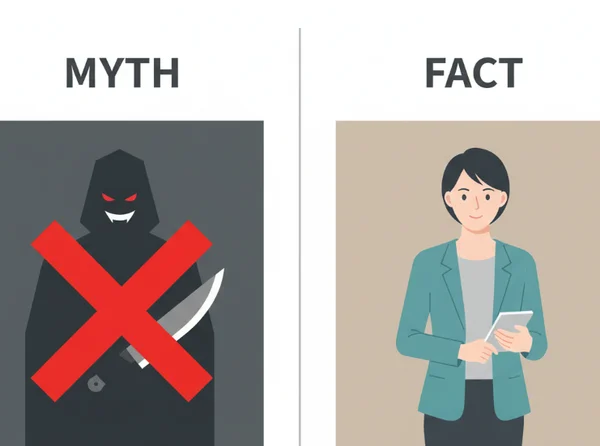
- Myth: All psychopaths are violent criminals. In reality, many people with elevated psychopathic traits live ordinary lives. Some channel boldness and low anxiety into high-pressure careers. Violence is not a defining feature.
- Myth: Psychopaths have no emotions at all. Research suggests they experience emotions, but those emotions tend to be shallower and shorter-lived. It's a reduction, not a complete absence.
- Myth: You can spot a psychopath immediately. Because many people with these traits are socially skilled and charming, they often blend in seamlessly. There is no reliable visual indicator.
- Myth: Psychopathy is untreatable. While deeply ingrained personality traits are resistant to change, targeted interventions — particularly those focused on behavior rather than personality restructuring — can help manage problematic patterns.
- Myth: If I'm wondering about it, I'm definitely not one. Self-awareness varies widely. Some individuals with psychopathic traits do recognize their patterns, especially when prompted to reflect. Asking the question does not rule anything in or out.
A Self-Reflection Checklist for Psychopathic Traits
Before jumping to conclusions, try this structured self-reflection exercise. Rate each statement honestly on a scale from 1 (rarely true) to 5 (almost always true):
- I find it difficult to genuinely feel what others are feeling, even when they're in obvious distress.
- I often say what people want to hear, even if I don't mean it.
- I feel bored easily and need constant stimulation or novelty.
- I rarely feel guilty after doing something that hurt someone else.
- I often charm people to get what I want, then lose interest in them.
- I take risks without thinking much about potential consequences.
- I can stay unusually calm in situations that upset most people.
- I tend to blame others when things go wrong, even when I know I contributed to the problem.
- My emotional reactions feel shallow or short-lived compared to those around me.
- I've been told I seem cold, detached, or hard to read emotionally.
How to Interpret Your Responses
This checklist is not a diagnostic tool — it's a reflection aid. No score threshold tells you whether you "are" or "aren't" a psychopath. Instead, look for patterns. If most of your ratings cluster at 4–5 and these patterns create real problems in your relationships or daily life, a conversation with a mental health professional could provide valuable clarity.
Also consider timing: Are these long-standing patterns, or responses to a specific stressful period? Chronic patterns carry more significance than temporary reactions. Either way, self-reflection like this is a constructive step toward understanding yourself better.
What to Do If These Traits Feel Familiar
Recognizing psychopathic traits in yourself can feel unsettling. Here's a practical roadmap for what comes next:
Step 1: Avoid self-diagnosis. Online information — including this article — provides education, not diagnosis. Psychopathy is complex and exists on a spectrum.
Step 2: Reflect with honesty, not judgment. The goal is not to label yourself but to understand which patterns affect your life and relationships. Self-awareness is the foundation for any meaningful change.
Step 3: Consider professional evaluation. A licensed psychologist or psychiatrist can conduct a formal assessment using validated tools like the PCL-R. This provides a far more accurate picture than any online resource.
Step 4: Explore targeted strategies. Even if you do have elevated psychopathic traits, evidence-based approaches — particularly cognitive-behavioral strategies — can help you manage impulsivity, improve relationship skills, and develop more constructive behavioral patterns.
Step 5: Separate identity from behavior. Having some psychopathic traits does not make you a "bad person." Traits are patterns, not moral verdicts. What matters most is what you choose to do with that self-knowledge.
If you'd like a structured way to reflect on traits related to psychopathy, narcissism, and Machiavellianism, the Dark Triad personality assessment can help you organize your thinking. It's designed as an educational self-exploration tool — not a diagnostic instrument.
When Should You Talk to a Mental Health Professional?
Not everyone who wonders "am i a psychopath" needs professional help. However, certain situations suggest that a conversation with a licensed mental health provider is worthwhile:
- Your behavioral patterns repeatedly damage relationships, career opportunities, or personal goals.
- People close to you consistently describe you as emotionally detached, manipulative, or uncaring — and you recognize some truth in those descriptions.
- You've engaged in risky, impulsive, or harmful behavior that you struggle to control or feel little regret about.
- You want a clearer, more objective understanding of your personality traits beyond what self-reflection can offer.
A professional evaluation is not a punishment — it's a tool for clarity. Mental health professionals can help you distinguish between personality traits, situational responses, and treatable conditions. They can also help you develop concrete strategies for areas you'd like to improve.
This content is for educational and self-reflection purposes only. It is not a clinical diagnosis and should not replace professional evaluation. If you are experiencing distress or concerns about your mental health, please consult a licensed mental health professional.
Taking the Next Step Toward Self-Understanding
Asking "am i a psychopath" takes courage — it means you're willing to look honestly at yourself. Whatever you discover, remember that understanding your personality traits is an act of empowerment, not a sentence. Psychopathic traits exist on a spectrum, and self-knowledge is the first step toward making deliberate, informed choices about how you navigate the world.
If today's reflection raised questions you'd like to explore further, consider taking a comprehensive Dark Triad test to gain structured insight into your personality profile. And if anything in this guide resonated strongly, a conversation with a mental health professional can turn that awareness into a clear plan forward.
Frequently Asked Questions
Can a psychopath know they are a psychopath?
Yes, some individuals with psychopathic traits are aware of their patterns, especially regarding reduced empathy or emotional detachment. However, this self-awareness varies widely and doesn't necessarily lead to distress or desire for change. A professional assessment provides the clearest picture.
What is the difference between a psychopath and a sociopath?
Psychopathy tends to involve more innate, neurological factors with controlled, calculated behavior. Sociopathy is more commonly linked to environmental causes with impulsive, erratic behavior. Both involve antisocial patterns, but the underlying mechanisms and presentations differ.
Can psychopaths feel love?
People with psychopathic traits may form attachments, but these bonds tend to be shallower and more strategic than typical emotional connections. They may care about someone in a possessive or functional sense without experiencing the deep emotional intimacy most people associate with love.
Are psychopaths born or made?
Research suggests a combination of genetic predisposition and environmental factors. Some neurological differences appear to be present from birth, while childhood experiences — including trauma, neglect, or inconsistent parenting — can shape how those traits develop and express themselves.
How accurate are online psychopath tests?
Online assessments can raise useful awareness about personality patterns, but they are not diagnostic tools. Validated instruments like the PCL-R require trained professional administration. Self-report tools are best used as starting points for reflection, not as definitive answers about your personality.
Am I dating a psychopath?
Look for consistent patterns rather than isolated incidents: chronic dishonesty, emotional manipulation, lack of genuine remorse, and a pattern of exploiting your trust. If these behaviors are persistent and cause harm, consider seeking guidance from a therapist who specializes in relationship dynamics.
Can psychopathic traits be changed or managed?
Deeply ingrained traits may be resistant to change, but specific behaviors can absolutely be managed. Cognitive-behavioral therapy helps with impulsivity and interpersonal skills. The key is focusing on behavior modification rather than attempting to fundamentally "fix" personality structure.