Dark Triad Test Traits: Machiavellianism vs Narcissism vs Psychopathy Explained
Have you ever found yourself confused by the different "dark" personality traits you hear about? Terms like narcissism, Machiavellianism, and psychopathy are often used interchangeably, but they describe very different patterns of thought and behavior. Are you trying to understand the fine lines between strategic thinking, self-admiration, and a lack of empathy?
You're not alone. Many people want clarity on these traits. They aim to understand themselves and others better. This guide breaks down the core differences—and surprising overlaps—in the Dark Triad's three pillars. We will explore what truly separates a calculated strategist from someone who needs constant admiration, and how both differ from an individual who acts impulsively without remorse.
Understanding these distinctions is the first step toward genuine self-awareness. To get a personalized look at where you might fall on these spectrums, you can always discover your profile with our research-backed assessment.
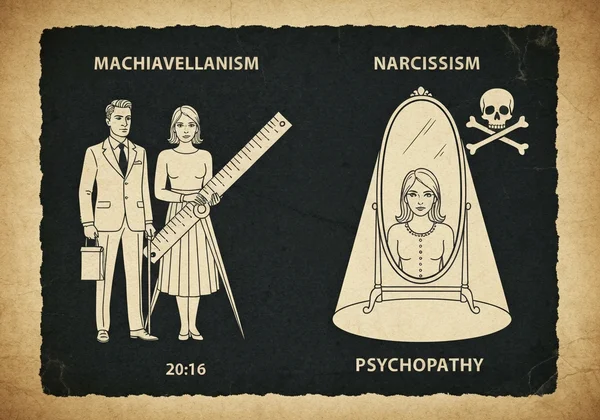
Machiavellianism vs Narcissism: Unpacking Key Differences
While both Machiavellianism and narcissism involve a degree of self-interest and manipulation, their core motivations and methods are fundamentally different. Mistaking one for the other is easy, but looking at their underlying drivers reveals a clear distinction.
The Manipulative Strategist vs. The Self-Obsessed Admirer
Think of someone high in Machiavellianism as a master chess player. Their actions are calculated, strategic, and focused on a long-term goal. They are patient manipulators. They see people as chess pieces. They use charm, deception, and flattery to win power or material gain. Their worldview is cynical; they believe everyone is out for themselves, so they are simply playing the game better than others. Imagine a colleague who always agrees with the boss in meetings but subtly undermines rivals when no one is looking. Their goal isn't just to be liked; it's to secure a promotion.
In contrast, an individual with strong narcissistic traits is more like an actor on a stage who craves a standing ovation. Their primary goal is not necessarily control, but admiration and validation. They build up a grandiose, idealized self-image and need others to constantly reflect it back at them. Their manipulations are geared toward maintaining this illusion of superiority and feeding their ego, making them highly sensitive to criticism. Consider a friend who dominates every conversation, turning it back to their own achievements. A minor critique might be met with disproportionate anger because it threatens their flawless self-perception.
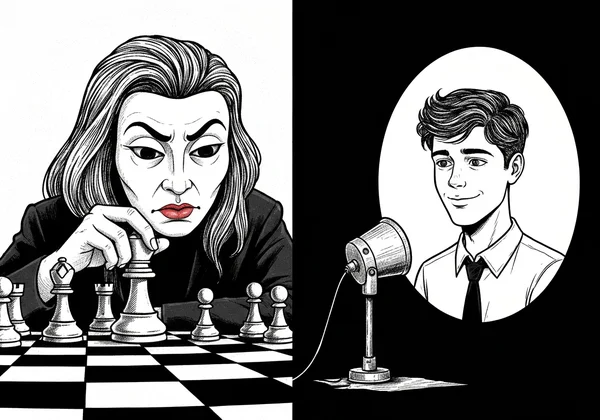
Motivation & Focus: Power vs. Grandiosity
The ultimate goal for a Machiavellian individual is tangible power and control. They are pragmatic and results-oriented. They will form alliances, bide their time, and act friendly if it serves their purpose, only to discard the relationship when it's no longer useful. Their focus is external—on achieving a specific objective.
The motivation for a narcissistic individual is internal—to protect their fragile, yet inflated, sense of self. Their grandiosity requires an audience. They seek attention, status, and envy from others because it confirms their perceived specialness. While they may also desire power, it's often as a means to gain more admiration, not as an end in itself.
Psychopathy vs Narcissism: A Deeper Dive into Emotional Landscapes
Psychopathy and narcissism are perhaps the most commonly confused traits within this triad. Both can present with superficial charm and a disregard for others' feelings, but their internal emotional worlds are vastly different. The key distinction lies in empathy, impulsivity, and the nature of their self-obsession.
Empathy, Impulsivity, and Superficial Charm: Where They Diverge
Individuals with narcissistic traits often possess low cognitive empathy. This means they can intellectually understand what someone else is feeling, which they cleverly use to manipulate them. However, they lack affective empathy—the ability to actually share or feel that emotion.
Conversely, individuals high in psychopathy display a profound lack of both types of empathy. They often struggle to even recognize emotions in others, let alone feel them. This emotional void is paired with high impulsivity and a need for stimulation. Their charm is a tool for the moment. It lacks the narcissist's need for ongoing admiration. A narcissist rages at ego threats. A psychopath's aggression stays cold and calculated.
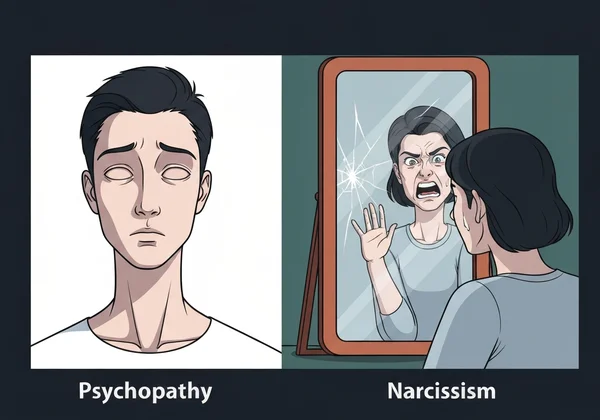
Grandiosity vs. Callousness: The Spectrum of Self-Regard
The grandiosity of a narcissist is a defense mechanism. It's a large, inflated balloon that is surprisingly easy to pop. Criticism or rejection can trigger deep feelings of shame and anger because it threatens their carefully constructed self-image. Their sense of superiority is dependent on external validation.
The self-regard in someone high in psychopathy is rooted in genuine callousness. They don't need others to validate their superiority because they often have a fundamental disregard for social norms, rules, and the value of other people. Their confidence isn't fragile; it's a byproduct of their inability to feel remorse, fear, or attachment in the way most people do. If you're curious about how these traits might manifest in your own personality, you can take the test to gain more insight.
Dark Triad Traits Differences: Overlaps and Unique Characteristics
While we've focused on the differences, it's important to remember these three traits form a "triad" because they share a common core. Understanding both the shared foundations and the distinct markers is key to a complete picture.
Shared Foundations: The Core of the Dark Triad
All three traits in the triad are linked by a common thread of self-centeredness, emotional coldness, and a tendency to be manipulative or exploitative. Individuals who score high across these characteristics generally prioritize their own needs and desires far above those of others. This can manifest as:
- A lack of genuine empathy: Difficulty feeling or understanding the emotions of others.
- Interpersonal manipulation: Using others as tools to achieve personal goals.
- A cynical view of humanity: Believing others are weak, foolish, or also self-serving.
Identifying the Distinct Markers of Each Trait
To simplify, you can think of each trait's most unique feature as its "calling card":
- Machiavellianism: The hallmark is long-term, strategic manipulation. They are the patient planners.
- Narcissism: The defining feature is grandiosity and a need for admiration. They are the attention-seekers.
- Psychopathy: The key marker is high impulsivity and a profound lack of remorse. They are the risk-takers.
How Your Dark Triad Test Scores Differentiate These Traits
Reading about these traits is one thing, but seeing how they measure up within your own personality provides a much clearer perspective. A structured assessment like the Dark Triad Test doesn't just label you; it provides scores that show the degree to which you exhibit tendencies associated with each trait.
Interpreting High Scores for Machiavellianism and Narcissism
A high score in Machiavellianism doesn't automatically mean you are a malicious person. It could indicate a pragmatic and strategic mindset, which can be an asset in fields like business or law. Your report would help you understand if this tendency is balanced or if it leads you to be overly cynical.
Similarly, a high score in narcissism might point to strong self-confidence and ambition. However, the report can also highlight if this crosses over into a need for validation that might strain your relationships. Understanding the nuance is key to personal growth.
Decoding Psychopathy Tendencies in Your Report
The psychopathy scale is the one that often causes the most concern, but it's crucial to interpret it correctly. The test measures personality traits—not clinical disorders. A higher score often reflects tendencies like impulsivity, thrill-seeking, and low anxiety. These traits can be channeled positively into high-stakes careers like being a surgeon or an extreme sports athlete. The report helps you understand these tendencies, allowing you to manage them constructively. Ready to see your results?
Disclaimer: The information in this article is for educational purposes only. The Dark Triad Test is a self-exploration tool and is not a substitute for a professional clinical diagnosis or psychological advice.
Frequently Asked Questions About Dark Triad Traits
How do I know if I am dark triad?
The Dark Triad is a spectrum of personality traits, not a simple "yes or no" diagnosis. Everyone exhibits some of these traits to a certain degree. The most reliable way to understand your personal profile is by taking a scientifically-validated assessment designed to measure them. An online tool can give you a baseline understanding of your tendencies in a confidential setting. For a clear starting point, you can start your test now.
What is Machiavellianism vs narcissism?
The main difference is motivation. Machiavellianism is driven by a desire for long-term power and control. They use people as strategic tools. Narcissism, on the other hand, is driven by a need for admiration. This validation supports a grandiose but fragile sense of self. One wants to be the puppet master; the other wants to be the star.
How do dark triad people act?
Behavior varies widely. However, common patterns include a focus on self-interest and a tendency to manipulate others. This manipulation can involve charm, deception, or coercion. A core issue is a lack of deep, genuine empathy. While they can appear charming and confident, they often struggle to build authentic relationships based on trust.
Empowering Self-Awareness: Your Path to Clarity
Untangling the threads of Machiavellianism, narcissism, and psychopathy is a powerful exercise in self-discovery. Recognizing that these are distinct constructs with unique motivations helps us move beyond simple labels. It leads to a more nuanced understanding of human behavior—both in ourselves and in others. The strategist, the admirer, and the risk-taker each represent a different facet of this complex psychological model.
Clarity is the foundation of personal growth. Knowing your own tendencies is not about judgment; it's about empowerment. It gives you the knowledge to harness your strengths and manage your challenges.
Ready to stop guessing and start knowing? Take the free Dark Triad Test on our homepage to receive your personalized scores and begin your journey toward deeper self-awareness today.