Managing Dark Triad Traits: Effective Treatment & Self-Improvement Strategies
After discovering high Dark Triad traits, it's natural to ask: Can these parts of my personality change? Many people who explore their personality profile wonder if these seemingly deep-rooted characteristics can be managed or modified. The truth involves nuance but offers real hope. Change is possible, but it requires understanding, effort, and the right strategies.
In this guide, we'll examine proven strategies for managing Dark Triad traits, including Machiavellianism, narcissism, and psychopathy. We will look at both formal clinical treatments and practical self-improvement techniques for daily life. Understanding your unique personality profile is the first step toward growth. You can start this journey of self-discovery by taking the free Dark Triad test to get a clear baseline.

Understanding the Nature of Dark Triad Traits
Before discussing management, it's crucial to understand what we're working with. Dark Triad traits are personality characteristics, not fixed destinies. They exist on a spectrum, and their expression can be influenced by many factors throughout a person's life. Understanding this foundation is key to developing effective strategies for change.
The Stability vs. Malleability of Dark Triad Traits
Personality traits, including the Dark Triad, have a stable component. They often form early in life and can remain consistent over time. However, modern psychology recognizes that personality is also malleable, meaning it can change. This "soft plaster" view suggests that while our core tendencies may be set, our behaviors, attitudes, and coping mechanisms can evolve.
Research shows that significant life events, conscious effort, and targeted interventions can lead to changes in personality expression. The goal isn't to erase these traits entirely but to manage their negative impacts while potentially harnessing their more adaptive sides. This process starts with awareness and a genuine desire for personal growth.
Research on Trait Development and Environmental Influences
Dark Triad traits are believed to develop from a combination of genetic predispositions (nature) and environmental factors (nurture). A person might be born with a certain temperament, but their upbringing, social experiences, and life challenges shape how these traits manifest. For example, a competitive and stressful environment might amplify Machiavellian tendencies.
Understanding these influences is empowering. It means that by changing your environment, learning new social skills, and building healthier relationships, you can actively influence your behavior. This perspective shifts the focus from a fixed identity to a dynamic process of development, where self-improvement is always a possibility.
Clinical Approaches to Managing Dark Triad Traits
For some individuals, especially when traits are pronounced and cause significant distress or harm, professional help is the most effective path. Clinical treatment offers structured support from a trained mental health professional.
When to Consider Professional Support
Professional support is recommended if Dark Triad traits lead to:
- Serious problems in relationships (e.g., constant conflict, manipulation, abuse).
- Difficulties at work or school (e.g., job loss, inability to collaborate).
- Legal or financial troubles.
- Co-occurring mental health issues like depression, anxiety, or substance abuse.
- A general sense of emptiness or dissatisfaction with life.
A therapist can provide a safe, non-judgmental space to explore these patterns and develop strategies for change. They can also screen for underlying personality disorders that may require more intensive care.
Evidence-Based Therapeutic Modalities
Several therapeutic approaches have shown promise in helping individuals manage challenging personality traits. A therapist will tailor the approach to the person's specific needs and goals.
Some effective modalities include:
-
Cognitive Behavioral Therapy (CBT): This therapy helps individuals identify and challenge distorted thought patterns. It helps them replace those thoughts with healthier, more realistic ones. For example, it can help someone with narcissistic traits learn to consider others' perspectives.
-
Dialectical Behavior Therapy (DBT): DBT focuses on building skills in four key areas: mindfulness, distress tolerance, emotion regulation, and interpersonal effectiveness. It is particularly useful for managing impulsive behaviors and emotional instability.
-
Schema Therapy: Schema Therapy focuses on early life experiences that create persistent negative patterns. It helps people understand the origins of their behavior and develop healthier approaches to meeting their emotional needs.
-
Mentalization-Based Treatment (MBT): MBT helps people understand their own mental states and those of others. This can be especially effective for improving empathy and reducing manipulative behaviors.

Self-Guided Strategies for Dark Triad Trait Management
Not everyone with high Dark Triad traits needs clinical therapy. Many people can make significant progress through self-guided efforts. These strategies focus on increasing self-awareness and making conscious behavioral changes. The first step is often getting an objective measure of your traits, which our online assessment provides.
Building Self-Awareness Through Reflection
Change begins with honest self-reflection. Without awareness, it's impossible to see the patterns that need addressing. This process involves looking at your thoughts, feelings, and actions without judgment.
Here are some ways to build self-awareness:
- Journaling: Write down your daily interactions, especially those that were difficult. Note your thoughts and feelings. Over time, you may see patterns in how you react to certain situations.
- Mindfulness Meditation: Practicing mindfulness helps you observe your thoughts without getting carried away by them. This creates a space between impulse and action, giving you the power to choose your response.
- Seeking Feedback: Ask trusted friends, family, or colleagues for honest feedback on how your behavior affects them. Approach these conversations with an open mind and a willingness to listen.
Practical Behavioral Interventions
Once you have a better understanding of your patterns, you can start implementing practical changes. These small, consistent actions can lead to significant long-term improvements.
Consider trying these interventions:
- Practice Empathy: Actively try to see situations from another person's point of view. Ask questions like, "How might they be feeling?" or "What might their perspective be?"
- Develop Prosocial Goals: Shift your focus from purely self-serving goals to goals that also benefit others. This could be mentoring a colleague, volunteering, or simply helping a friend.
- Improve Emotional Regulation: When you feel a strong negative emotion like anger or frustration, pause before reacting. Use techniques like deep breathing or taking a short walk to calm down before responding.
Long-Term Development and a Growth Mindset
Changing Dark Triad traits takes time and consistent effort—there are no quick fixes. It's an ongoing journey of personal development that requires patience, commitment, and a belief that you can grow. Adopting a growth mindset is essential for long-term success.
Setting Realistic Expectations for Change
It is unrealistic to expect a complete personality overhaul overnight. Lasting change is gradual and often involves setbacks. Set small, achievable goals, such as practicing active listening in one conversation per day or pausing before reacting to criticism.
Celebrate your progress, no matter how small. Acknowledge the effort you're putting in. This reinforces positive behavior and keeps you motivated. Recognizing your starting point with a tool like the Dark Triad profile can help you track this progress over time.
Leveraging Dark Triad Traits Positively
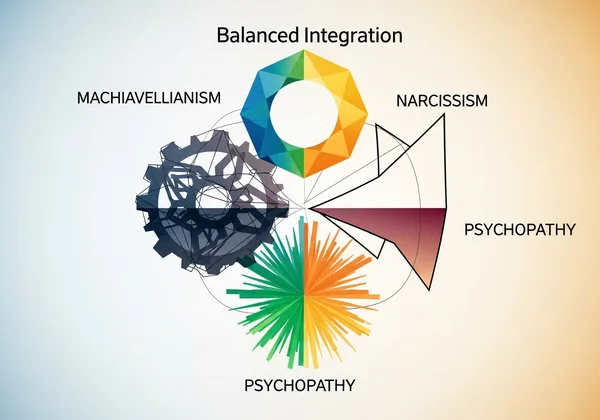
While often viewed negatively, some aspects of the Dark Triad can be adaptive when channeled constructively. The goal is not to eliminate these traits but to balance them and use them for good.
For instance:
- Machiavellianism: The strategic thinking associated with this trait can be used for effective leadership and achieving positive, ethical outcomes.
- Narcissism: Self-confidence and ambition, when tempered with humility, can drive you to achieve great things and inspire others.
- Psychopathy: A cool head under pressure can be invaluable in crisis situations, such as for surgeons or first responders.
By understanding your unique blend of traits, you can learn to manage the downsides while leveraging the upsides in a healthy, prosocial way.
Your Path to Balanced Trait Management
Understanding and managing Dark Triad traits is an ongoing journey of self-discovery and growth. While completely changing your personality isn't realistic, you can definitely improve self-awareness, emotional regulation, and your relationships with others.
Whether you choose professional support or self-guided strategies, the key lies in recognizing your patterns, developing insight, and making consistent behavioral changes. Your journey can begin today by establishing a baseline. Revisit your results or start your test to understand your specific trait profile and identify which strategies will be most valuable for you. Remember, personality exists on a spectrum, and growth is always possible.
Frequently Asked Questions About Dark Triad Trait Management
Are Dark Triad traits considered mental disorders that require treatment?
No, Dark Triad traits are personality characteristics, not mental disorders. However, extremely high levels of these traits can be associated with clinical conditions like Narcissistic Personality Disorder (NPD) or Antisocial Personality Disorder (ASPD). A professional can make that distinction. For most people, these traits exist at a subclinical level.
Can therapy completely eliminate Dark Triad traits?
Therapy is unlikely to completely eliminate core personality traits. The goal of treatment is not erasure but management. It helps individuals reduce harmful behaviors, improve empathy, build healthier relationships, and use their strengths in more positive ways. Change is focused on behavior and insight, not on changing one's fundamental identity.
What's the difference between self-improvement and clinical treatment for Dark Triad traits?
Self-improvement involves self-guided strategies like reflection, reading, and practicing new behaviors. It's a great option for those with mild to moderate traits who are motivated to change. Clinical treatment is a structured process with a licensed professional, recommended when traits cause significant life problems or are linked to a personality disorder. A foundational test can be a useful tool for either path.
How can I tell if my Dark Triad traits are affecting my relationships or work performance?
Look for patterns. Do you consistently have conflicts with colleagues? Do friends or partners say you are manipulative or lack empathy? Are you struggling to maintain long-term relationships? An honest self-assessment, combined with feedback from others, can reveal the impact of your traits on your daily life.
Are there specific professions where Dark Triad traits are more beneficial or challenging?
Some research suggests that individuals with higher Dark Triad traits are overrepresented in competitive fields like business, law, and surgery, where confidence and emotional detachment can be advantageous. However, these same traits can be highly challenging in roles requiring deep empathy and collaboration, such as teaching, nursing, or counseling.